

Copyright Websimple | Terms of Use
139 Perron Boulevard East, New Richmond, QC Canada G0C 2B0


|
Artificial Intelligence and New Technologies

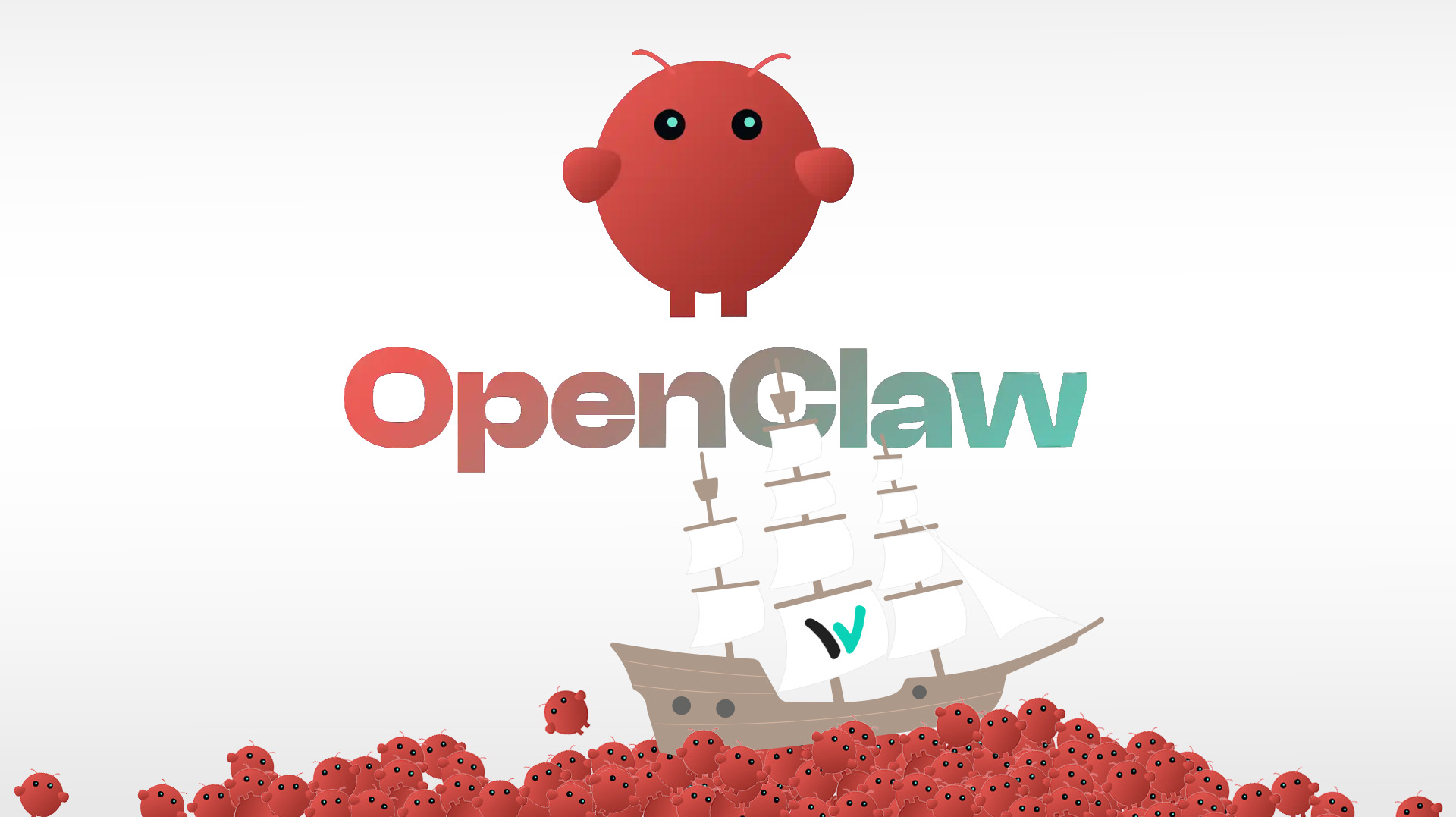
For several weeks now, I’ve been working intensely (almost obsessively) on a new platform called OpenClaw. As soon as I installed it on a computer, I immediately saw its potential. I set it up and tested it on Windows and Linux, and I’ve gone through practically all the available technical documentation.
My conclusion: OpenClaw is re-vo-lu-tion-ary.
It is a scalable artificial intelligence orchestration system that enables the creation of autonomous workflows on a dedicated computer.

Most people today are familiar with artificial intelligence through chatbots like ChatGPT, or through the generation of images and videos that periodically pop up on social media, sometimes going viral. There have been numerous experiments with these technologies—often entertaining, sometimes useful—but their use has always remained limited. These are additional work tools that have gradually become available to us, with varying levels of efficiency and accuracy. We were still a long way from true operational use in business.
By 2025, new possibilities had opened up for Large Language Models (LLMs ). We saw the emergence of other types of tools, such as Claude Code and Codex from OpenAI (the creators of ChatGPT)—software capable of viewing files and folders on a computer, understanding complex work contexts, and performing complete tasks. This is what has driven the rise of “vibe coding,” where humans focus more on guiding the intent and architecture, while artificial intelligence handles a large part of the development process on its own.
What really struck us about OpenClaw is its ability to go (much) further. The ability to develop virtually any kind of automation is now a REAL possibility.
Websimple tested the system's ability to interact with various web interfaces as well as with installed software, even if it is outdated.
In terms of execution, OpenClaw is highly functional and can perform extremely precise tasks by integrating into your actual business processes. You communicate with it via text or voice chat (or both), just as you would with a remote employee. The agent then notifies you when its actions are complete, or if it needs further clarification before proceeding, depending on the context of the task you assigned. On its own, this system is capable of eliminating a significant portion of the friction, irritations, and repetitive tasks that weigh down or slow down your daily work.
Specifically, we can talk about:
So, to sum it up: artificial intelligence can now use your current tools.
However, before the magic happens, you obviously have to set everything up properly. That’s where things get a little tricky.
Here’s a brief explanation for anyone who wants to get the gist of it.
* Geek alert for the information below *
The system operates continuously thanks to a gateway that runs constantly on a dedicated computer, receiving messages, connecting channels, keeping sessions active, and providing access to available resources.
At the heart of the system, a control hub loads the appropriate context, makes decisions based on data and constraints, and then executes tasks using skills, tools, scripts, and automations. The gateway acts as a control center, coordinating agents and ensuring overall consistency, while the workspace houses the necessary rules, files, tools, and configurations.
Sessions, which are recorded to disk, preserve the history of interactions and ensure continuity; they then gradually evolve into a semantic memory through search mechanisms that prioritize useful information while maintaining access to the full data. As for skills, they define specialized capabilities for performing specific tasks. Tools then enable flexible actions, whereas scripts execute rigid actions.
Automations, triggered in various ways—such as via scripts, context, hooks, watchers, or scheduling—add additional layers of execution as needed. Finally, the system relies on one or more agents, often organized into a multi-agent system, each of which can be specialized by task type—much like in a business—to optimize efficiency and context utilization.
Yes! It’s the open-source technology that has seen the fastest rise in popularity in human history. In our field, everyone is already talking about it. Even giants like NVIDIA are already dedicating significant resources to OpenClaw through the development of their own NemoClaw stack . Furthermore, a new foundation was recently established to ensure that this technology remains accessible to everyone as open source.
In the near future, OpenAI is expected to eventually develop and market a version of a similar operating system.
There's no news on this yet, but please know that Websimple is already ready to offer you OpenClaw technology as a product fully customized to your needs.
Websimple works with many organizations whose teams have a heavy workload.
This is most likely the reality for many small and medium-sized businesses in Quebec. There is always too much to do, too many follow-ups, too many ideas to develop, too many operations to maintain. As a result, many businesses miss out on a host of opportunities simply because they lack the time. This is also true for nonprofit organizations, because their budgets do not allow them to hire more staff. On the contrary, they are sometimes forced to cut back. These days, reducing productivity is not (or no longer) viable for businesses, as it is highly likely that their competitiveness in the market will be affected, and this could ultimately jeopardize their long-term viability.
By working with AI teams—whether to automate one or more tasks that reduce the workload—we enable people to devote more energy to what truly matters, as well as to activities that require genuine human interaction. If you’d like to learn more, please contact us.
This is the start of a new revolution. We'll be talking about it for a long time to come!
✏️ This Websimple blog post was written by a human (Seb) and edited by AI (JP)
✉️ Websimple supports a wide range of partners, businesses, and organizations in building their online presence. Do you have questions about the web and your organization? Contact us today. We’d be happy to help.

Sources:
Boat illustration: Jozi Gallant

As the founder of Websimple, Sébastien holds a degree in new media from Cyclone Arts and Technology. Self-taught, he has taken his knowledge and expertise to the next level through various training programs—both online and in-person—as well as by reading books for over 20 years. Passionate about his field and an excellent communicator, he knows how to explain technological possibilities and tools in simple terms, ensuring his clients benefit from them.
Questions? Contact Websimple