

Copyright Websimple | Terms of Use
139 Perron Boulevard East, New Richmond, QC Canada G0C 2B0


|
Artificial Intelligence and New Technologies

It's been over three years since ChatGPT entered our lives. Artificial intelligence, regardless of the model used, has transformed the way we work, play, and even engage in personal development #chatCoachdevie!
From simple conversational exchanges and casual queries (“Hey… can I substitute Worcestershire sauce for soy sauce?”) to sophisticated systems and agents capable of performing numerous specialized tasks in record time, AI is no longer just the latest novelty. It is now in a phase of genuine integration… and our lives will continue to change.
As we approach 2026, the WebSimple blog is tentatively offering a few AI predictions related to the web that we believe will shape the year. We’ve also focused on what will most directly impact our daily lives.
In short, quantum computers are fascinating (Ah! Nerds!), but they’re not for everyone. So, what can we expect this year in terms of artificial intelligence in our everyday lives? Let’s get started.
For those of you who are already fed up with seeing AI spread through all your work software like the Black Death in the Middle Ages… brace yourselves—this is only the beginning (they’ve got to get a return on all that investment, after all 🤫).
Emails, search engines, QuickBooks, Canva, Word (why does Copilot keep trying to help me copy and paste? 🤔), and so on: AI is everywhere now… for better or, sometimes… for nothing!
That said, we believe that 2026 will be a pivotal year in terms of relevance and effectiveness. In recent years, AI—still in its “beta” stage—has been rapidly adopted across the board, much like a new toy, with mixed results and, at times, questionable utility. It was a race!
Today, AI is more mature and better understood. Tools will become more sophisticated, more targeted, and more effective, because users have become more discerning. We will no longer be impressed by images of characters with six fingers.
From now on, technology will have to align with real needs, simply because no one sticks with useless or non-functional tools for long. But rest assured: some companies will still try to connect your cantaloupe spoon to Wi-Fi.
In 2026, you’ll be hearing more and more about agent-based AI. Agency refers to the ability to take action. We’re all learning something new every day! So an “agent-based” AI will be capable of making decisions and taking action.
Organizations are now seeking not only to leverage AI but also to enable it to automate certain tasks. For example, consider the difference between asking, “Chat, can you draft an email to wish our customers a Happy New Year?” and having emails sent out automatically—without even having to think about it—complete with personalized reminders for customers.
For now, it’s mainly the big players who are using these kinds of systems, but given their potential, it’s a safe bet that they’ll soon make their way into our workplaces.
It will be up to us to figure out how to keep our relationships as human as possible.
There are ads on the street, on TV, on the radio, on YouTube, and even on Netflix. You didn’t really think AI would be any different, did you?
The major players in AI, who will likely need funding at some point, will probably increasingly incorporate ads directly into AI chat threads or search results, in the form of products or services you may (or may not) need.
Hypothetically, if you ask ChatGPT what the best lightsabers are for your collection, it might soon suggest products directly from online retailers, complete with images, prices, and a direct link to checkout. Awesome! I just couldn't do without this portable air fryer for camping!
In 2026, we will therefore need to be extra vigilant and consume responsibly.
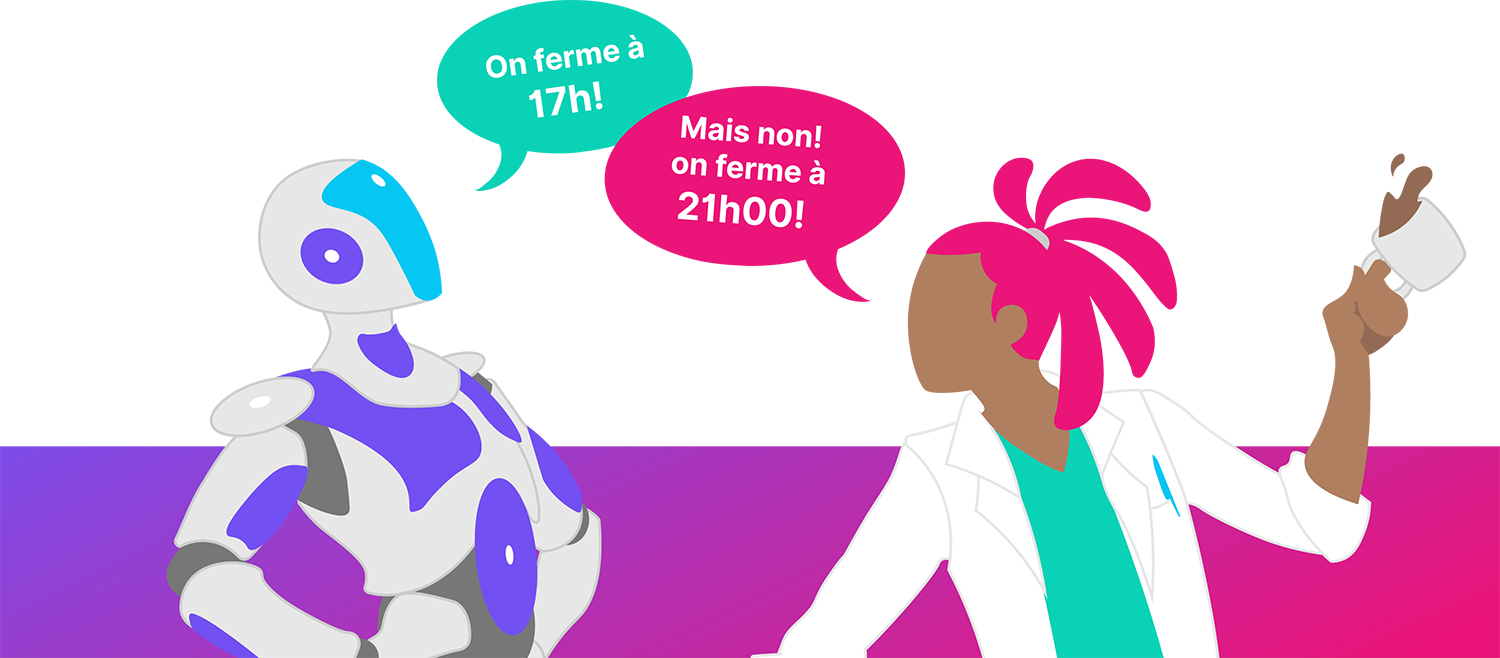
You’ve probably noticed: when you type a question into a search engine, the first results are often generated by AI. It’s even possible to perform a search based entirely on AI.
Our websites will therefore need to appeal not only to humans, but also to the intelligent bots that scan our pages, social media, and other platforms in search of answers.
The risk? That these bots make mistakes, get confused by conflicting information, or provide your customers with incorrect data: different opening hours, misrepresented services, or outdated information that’s still accessible.
It is therefore likely that in 2026, companies will redouble their efforts to centralize, review, and improve their content. Even though the goal is to appeal to search engines, this process remains highly beneficial for clarifying a company’s offerings and communicating more effectively.
Any questions? Contact us. We’d be happy to help you optimize your website.
Technology is evolving very quickly. Perhaps too quickly, especially for governments and large institutions. By 2026, security will be at the center of discussions about AI more than ever before.
The internet can become a battleground for misinformation, polarization, and deepfakes. As a result, you’ll be hearing more about digital sovereignty, which the Government of Canada defines as “the ability to exercise autonomy over one’s digital infrastructure, data, and intellectual property.”
This is reassuring news in a world in flux. Things are changing, and concrete measures are starting to be put in place to protect the public. 🤞
Whether we like it or are already overwhelmed by it, AI is here to stay. Perhaps not in the form of destructive machines like in *The Terminator*, but rather as increasingly effective tools… and, possibly, as ever-more-personalized sales channels.
Whether in a small or medium-sized business or at the government level, we will need to adapt and implement responsible solutions. And remember: you remain in control of how these tools are used.
The entire WebSimple team wishes you a 2026 filled with warmth, peace, togetherness, and resilience.
✏️ This WebSimple blog post was written entirely by a human and proofread by AI
✉️ WebSimple supports a wide range of partners, businesses, and organizations in developing their online presence. Do you have questions about the web and your organization? Contact us today. We’d be happy to help.
Sources:

Jozi honed her skills in illustration as a freelancer for several years. She now applies her artistic eye to project management and web design. With a degree in education, she enjoys helping to educate the public about all things related to the web and technology. Fascinated by the possibilities the web offers, she strives to learn as much as possible to help those around her.
Questions? Contact Websimple